AI Agents Examples: 6 Marketing Cases That Actually Ran
Summary
The clearest AI agents examples in marketing share one trait: a narrow job, clean data and a human holding the approval step. Slate's Zapier agent handled over 2,000 leads in a month, Kayo Sports scaled to 1.5 million message variations, and agencies run content from one chat window. Most results are vendor-reported, so start with lead enrichment, set a spend ceiling, demand a change log and hold back a control group.

A lead lands on your site at 2 a.m. By 2:03 it is enriched, scored and sitting in the right rep's queue. Nobody on your team touched it. That is the plainest of the AI agents examples running in marketing stacks today, and it is the one most teams should copy first.
This guide sorts real AI agents examples by the job they do: lead handling, content, personalization and cross-channel routing. Each one comes with what it actually did, what the vendor reported, and where it stops being useful.
What counts as an AI agent in marketing, and what does not
An agent takes a goal, picks its own steps, uses tools and acts. A rule that sends a welcome email after sign-up is automation. A system that notices the welcome email underperforms for one segment, swaps the channel and logs why is an agent.
That line matters because most "agent" announcements describe the first thing with the second thing's name. Before you count any example below, ask three questions. Does it choose between actions? Does it touch a live channel? Does it report what it changed?
If the answer to all three is yes, you are looking at an agent. If it only drafts and waits, you are looking at an assistant. Both have value. They need different budgets and different oversight.

Lead capture and enrichment: the example with the clearest payoff
Start here because the loop is short and the result is countable. Slate, a digital publishing platform, built an agent in Zapier that pulls lead data from several sources, enriches it and routes the strong leads to sales. According to Zapier's own write-up of the build, it handled over 2,000 leads in one month without manual lift.
Read that number with the right caveat: it is self-reported and it measures volume, not revenue. What it does prove is that the enrichment and routing step can run unattended at a scale a human queue cannot match.
A second pattern appears in the same piece. Clean energy company egg built an agent that enriches prospect records and drafts personalized outreach, then queues each email for human review before sending. No time-saved figure is published, but the design is the part worth stealing. The agent does the research and the draft. A person owns the send.
Skip this route if your lead volume is under a few hundred a month. At that size, a good form and a fast human reply beat any agent you can configure.
Personalization at volume: where agents earn their keep
Personalization is where agents stop being a convenience and start changing the numbers. Braze's published examples show the scale effect. Kayo Sports, an Australian streaming service, went from 300 message variations to 1.5 million using AI decisioning that picks message, creative, channel, timing and offer per subscriber. Braze reports 14% more subscriptions, 105% more cross-selling and a 20% rise in average subscription price.
Those are vendor-reported results on a vendor's own platform, so treat them as a ceiling, not a forecast. The mechanism is still instructive. No human wrote 1.5 million messages. A human wrote the constraints, and the system filled the space inside them.
The same source cites luxury platform 24S, where AI recommendations plus personalized journeys lifted abandoned-cart purchase conversion by 35% and back-in-stock add-to-cart by 7% within six months. Two small, specific lifts on two specific moments. That is how real agent gains usually look: narrow, measurable and boring.
Worth the setup if you already have clean event data. Not worth it if your product catalog or subscriber tags are a mess, because the agent will personalize the mess faster.
Content and SEO agents: useful, but only with a human owning the send
The content examples are the most visible and the most oversold. One Toronto agency owner described by Zapier runs research, drafting, WordPress publishing and monthly reporting for each client from a single chat window using Zapier's MCP connection with Claude. Each account used to take 10 to 15 hours of hands-on work a month.
That is a real shift in who does what. It is also a two-person shop with a narrow, repeatable deliverable. The workflow holds because the output format is fixed and a human still approves what goes live.
The failure mode is easy to name. An agent that publishes without review compounds one bad assumption across fifty pages. Run content agents in draft mode first. Promote them to publishing only after you have read a month of their output and found the same three errors zero times.

Ad and creative agents: fast variants, thin judgment
Large advertisers report agents on the creative and targeting side too. The figures circulate widely in vendor roundups: Kraft Heinz cutting ad-copy variant production from eight weeks to eight hours with Google Cloud AI, and Radisson Hotel Group reporting a 50% productivity gain in its ad team from AI-powered placement. Both numbers come from the companies or their vendors, and the search results that surface them mostly repeat each other without independent checks.
The takeaway is not the percentage. It is that variant generation is the cheapest thing an agent does and the most commonly shipped. Judgment about which variant deserves budget is the part still sitting with the media buyer.
If you run paid media, use agents to produce and test variants, then keep budget reallocation under a human threshold. A rule such as "the agent may shift up to 10% of daily spend between ad sets, anything above asks first" gives you speed without surprises.
Cross-channel routing: the example almost nobody has yet
Every example above lives inside one channel or one job. Lead enrichment is a CRM task. Personalization at Kayo is a messaging task. Variant generation is an ad task. The harder example is an agent that watches the whole campaign and moves work between channels.
Picture the situation a growth lead knows well. An email sequence has run for 48 hours. Opens plateau at 18%, well under the 21% you saw on the last launch. A single-channel agent keeps optimizing subject lines. A routing agent reads the plateau, shifts the next touch to paid social for that segment and writes down why.
This is the gap Compass is built to close: orchestration across email, ads, social and CRM, with the reasoning logged so you can audit it. Most of the public AI agents examples stop short of it because crossing channels means crossing data owners, budgets and approval chains. The technology is rarely the blocker. The permissions are.
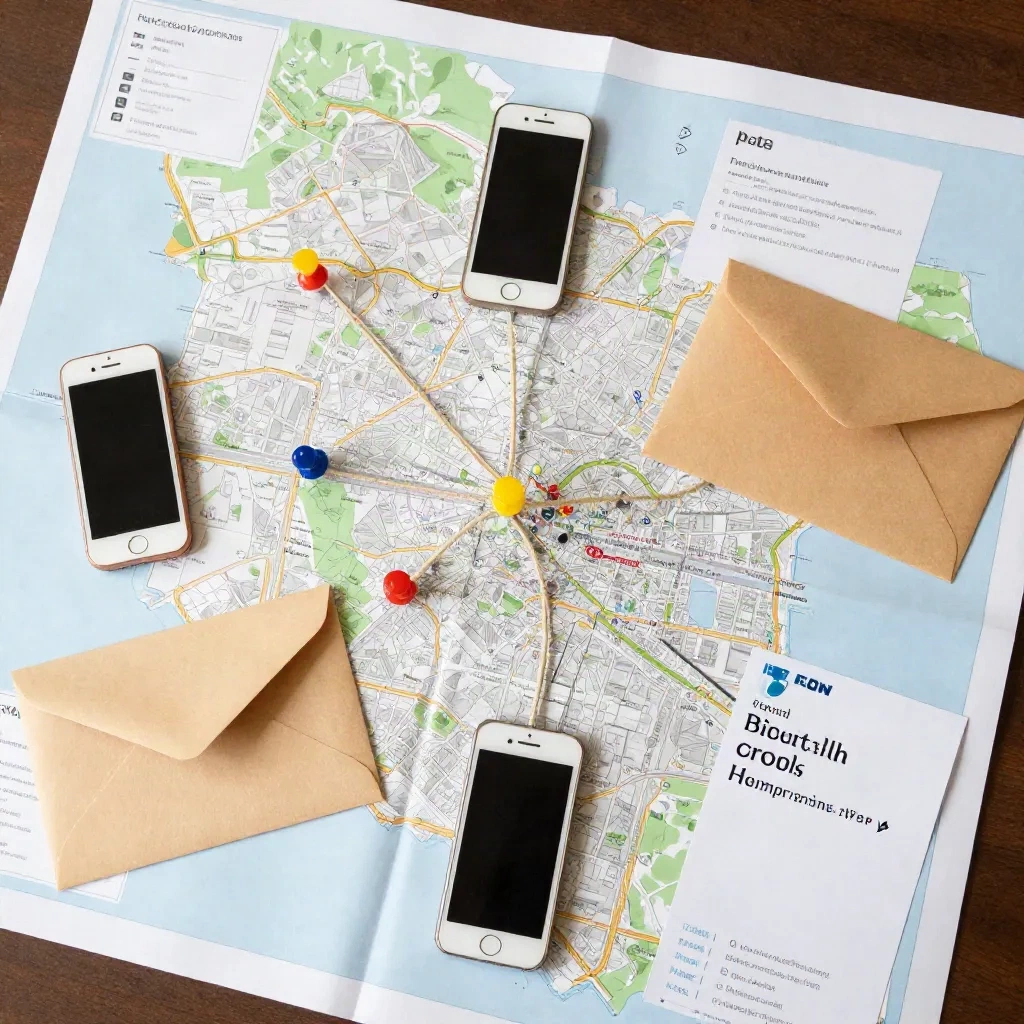
If you want to see where your own stack sits, count the handoffs. Every point where a human copies data from one tool to another is a place a routing agent could act, and a place a single-channel agent cannot.
How to measure an agent without fooling yourself
Every example in this guide came with a number, and every number needs a control. Before you switch an agent on, hold back a slice of traffic that keeps the old process. Without that slice you cannot tell whether the lift came from the agent or from the season.
Pick the metric the agent is allowed to move and write it down first. For lead routing it is time to first touch and cost per qualified lead. For personalization it is conversion at the specific moment you targeted, such as the abandoned cart. For content it is the share of drafts that ship without a rewrite.
Then check the second-order cost. A routing agent that lifts conversions while doubling support tickets has not won. Read the change log next to the revenue attributed to the campaign, and ask whether the agent's reasoning would survive a skeptical colleague. That is what the instruments actually measure: not the activity, but the outcome that stays after the activity stops.
Run the comparison for at least one full campaign cycle before you widen the agent's permissions. Four weeks is a sensible floor for email and lead work. Content effects need a quarter.
How to pick your first agent without wasting a quarter
Choose by loop length. The shorter the gap between the agent's action and a measurable result, the faster you learn whether it works. Lead routing closes a loop in hours. Content agents take weeks to show ranking effects. Cross-channel routing needs a full campaign cycle.
Three rules keep the first project honest:
Give the agent one goal and one metric, such as cost per qualified lead, not a vague mandate to "improve marketing".
Set a spend or volume ceiling it cannot cross without asking.
Require a change log in plain language, so you can read what it did on Monday morning.
Skip any vendor that cannot show you that log. An agent whose decisions you cannot read is a liability with a good demo.
What these examples tell you about the next 12 months
The pattern across every example is the same. The wins come from narrow jobs with clean data and a human holding the approval step. The overreach shows up where teams let a drafting tool publish, or let a single-channel optimizer stand in for a strategy.
The cap is set: pick one short loop this quarter, instrument it, and read the log weekly. If you run a product launch in Q1, start with lead enrichment and routing, add personalization once your event data is clean, and only then ask an agent to move work between channels. That sequence is the bearing worth holding.