Manus Alternatives: 5 AI Agents Marketers Can Test
Summary
Manus alternatives worth testing in November 2026 are Skywork, Genspark, Lindy, Flowith and OpenManus. Skywork leads for marketing deliverables such as decks, docs and visuals, Genspark is the closest like-for-like swap, Lindy suits recurring inbox work, Flowith is the lower-priced canvas option, and OpenManus is the self-hosted route for developers. Manus itself holds a 2.7 out of 5 on G2, mostly over unpredictable credit burn.
Verdict: Among Manus alternatives, Skywork is the one we would test first if your tasks are campaign decks, docs and visuals, because one subscription covers slides, documents, sheets and images at a lower entry price. Genspark is the closest swap for the one-prompt Manus workflow. Lindy wins on recurring inbox work. Flowith, OpenManus and the rest fit narrower jobs. Prices below are as of November 2026.
Why marketers are leaving Manus
Your campaign brief goes in. Forty minutes later the agent has burned 700 credits on one research task, and nothing told you the bill beforehand. That pattern sits behind most of the complaints on G2, where Manus averages 2.7 out of 5 with 42% of reviews at one star, mostly about credits and refunds.
Three other forces push the search. Ad-hoc tasks still run as isolated sessions, so the agent forgets last Tuesday's brand brief. Reliability drops on larger projects. And the ownership story stayed unsettled after regulators blocked Meta's roughly $2 billion acquisition in April 2026. None of this makes Manus unusable. It makes the cost of a bad run the real variable, and that is the number to compare.
How we compared the five alternatives
The five alternatives were picked because they solve a job a marketing lead actually hands to an agent: producing a deliverable, running a recurring workflow, or replacing the stack with something you control. We compared them on five criteria: entry price, free tier, what each tool produces, setup and control, and the independent review signal. The matrix above holds the figures.
Review evidence is thin for most of them. Only Manus and Flowith have a G2 aggregate we could verify, and Flowith's rests on 2 reviews. Treat every score here as a shortlist filter. The only test that settles the choice is your own brief, run twice, on two tools.
Skywork: the deliverable workspace for campaign assets
Skywork treats the agent as a set of specialists. Slides, documents, spreadsheets, images, websites, video and podcasts each get their own agent, and Deep Research slides cite academic and web sources instead of inventing bullets. For a marketing team that rebuilds the same quarterly deck, launch one-pager and ad mockup, that replaces three or four separate subscriptions with one.
The entry tier runs around $12 to $16 a month, which undercuts Manus, Genspark and Lindy. The limits are real. It does not match Manus on open-ended code execution, and the website builder produces MVP-grade pages. If your Manus use was mediocre slide output rather than unreliable execution, this is the most direct fix. If you ran agents against live systems, it is not.
Genspark: closest to the Manus workflow
Genspark keeps the single-prompt shape. Describe the deliverable, get a finished file, across slides, sheets, docs, images, video and even phone calls. Its Office and Google Workspace plugins remove an export step Manus leaves to you.
The tradeoff is the same credit model. Plus costs $24.99 a month for 10,000 credits, and per-task costs are visible only after signup, so the burn complaint can follow you across. Breadth also means a specialist can beat it on one format. Pick Genspark when the workflow was fine and the vendor was the problem.
Lindy, Flowith and OpenManus: three different jobs
Lindy is not a Manus clone, and it does not pretend to be. You connect Gmail, Slack and your CRM, write one prompt, and the agent reruns that job on a schedule: meeting notes, lead enrichment, follow-up drafts. SOC 2 and GDPR/HIPAA compliance on paid tiers matter if customer data flows through it. For a one-time research project it is the wrong tool, and testers report burning a paid plan's credits within weeks of daily use.
Flowith is the lower-priced canvas. At $19.90 a month for 20,000 credits and access to 40-plus models, it is the cheapest hosted agent here. The branching canvas keeps parallel research threads visible. With only 2 G2 reviews behind it, validate it on a real workload first.
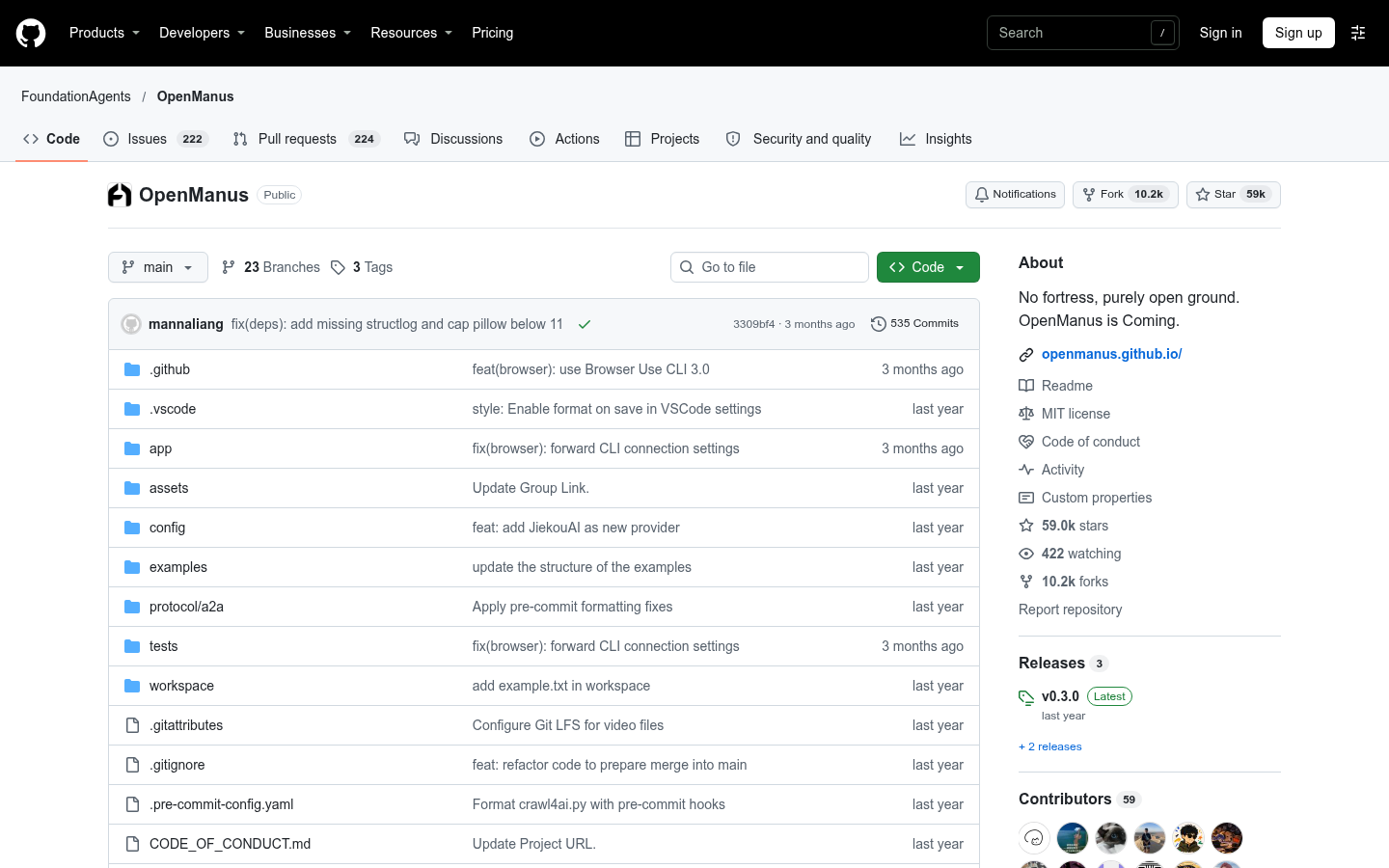
OpenManus is the open-source route, an MIT-licensed project with about 59,000 GitHub stars. No credit meter, full control over data. You also own installation, keys, security and every upgrade. For a marketing team without an engineer, the credit variance you escape is replaced by an ops burden you did not have before.
Which one to choose
Match the tool to the job rather than to the leaderboard:
Decks, docs, creative assets for campaigns: Skywork.
Same one-prompt workflow, different vendor: Genspark.
Recurring inbox, meeting and lead routines: Lindy.
Lowest paid entry with a visual canvas: Flowith.
Self-hosted control with an engineer on the team: OpenManus.
Single-prompt model works and you can absorb credit variance: stay on Manus and set a monthly credit ceiling.
What to run before you switch
Take one real brief, such as a launch plan with a deck and a one-page summary, and run it through your current Manus plan and one alternative. Record three numbers: credits or dollars spent, minutes of editing you did afterwards, and whether the output survived a stakeholder read without rework. If the alternative saves you the editing time, the price difference rarely matters. If it does not, the cheaper plan was not cheaper.
Re-check pricing on the vendor page on the day you buy. Credit allowances and plan names in this category changed several times in 2026, and the figures above will age.
At-a-glance
| Skywork | Genspark | Lindy | Flowith | OpenManus | |
|---|---|---|---|---|---|
| Entry price (Nov 2026) | Pro around $12 to $16/month, discount codes circulate | Plus at $24.99/month ($19.99 billed yearly) for 10,000 credits | Paid plans from about $30 to $50 per user per month, depending on tier | Pro at $19.90/month for 20,000 credits | Free software under the MIT license; you pay for model APIs and hosting |
| Free tier | Daily free credits shown at login (800 on our visit), limited generations | About 100 credits a day, with a lifetime cap | Short trial, then paid; the free credits lock premium actions | 300 one-time credits on the free plan | Unlimited, since you run it yourself |
| What it produces | Slides, docs, sheets, images, websites, video, podcasts | Slides, sheets, docs, images, video, code, phone calls | Inbox triage, meeting notes, follow-ups, lead enrichment | Research threads, decks, simple sites on a branching canvas | Whatever you code: browser, shell and file tasks |
| Setup and control | Pick a specialist agent or skill, then prompt; scheduled tasks included | One prompt, no setup; credit costs shown after signup | Connect your apps, write one prompt, it reruns on a schedule | Canvas with parallel branches; more clicking, more visibility | Developer install, config files, your own keys |
| Independent review signal | No independent aggregate we could verify | No independent aggregate we could verify | No independent aggregate we could verify; testers report fast credit burn | 4.0 out of 5 on G2, but only 2 reviews | About 59,000 GitHub stars, no commercial reviews |
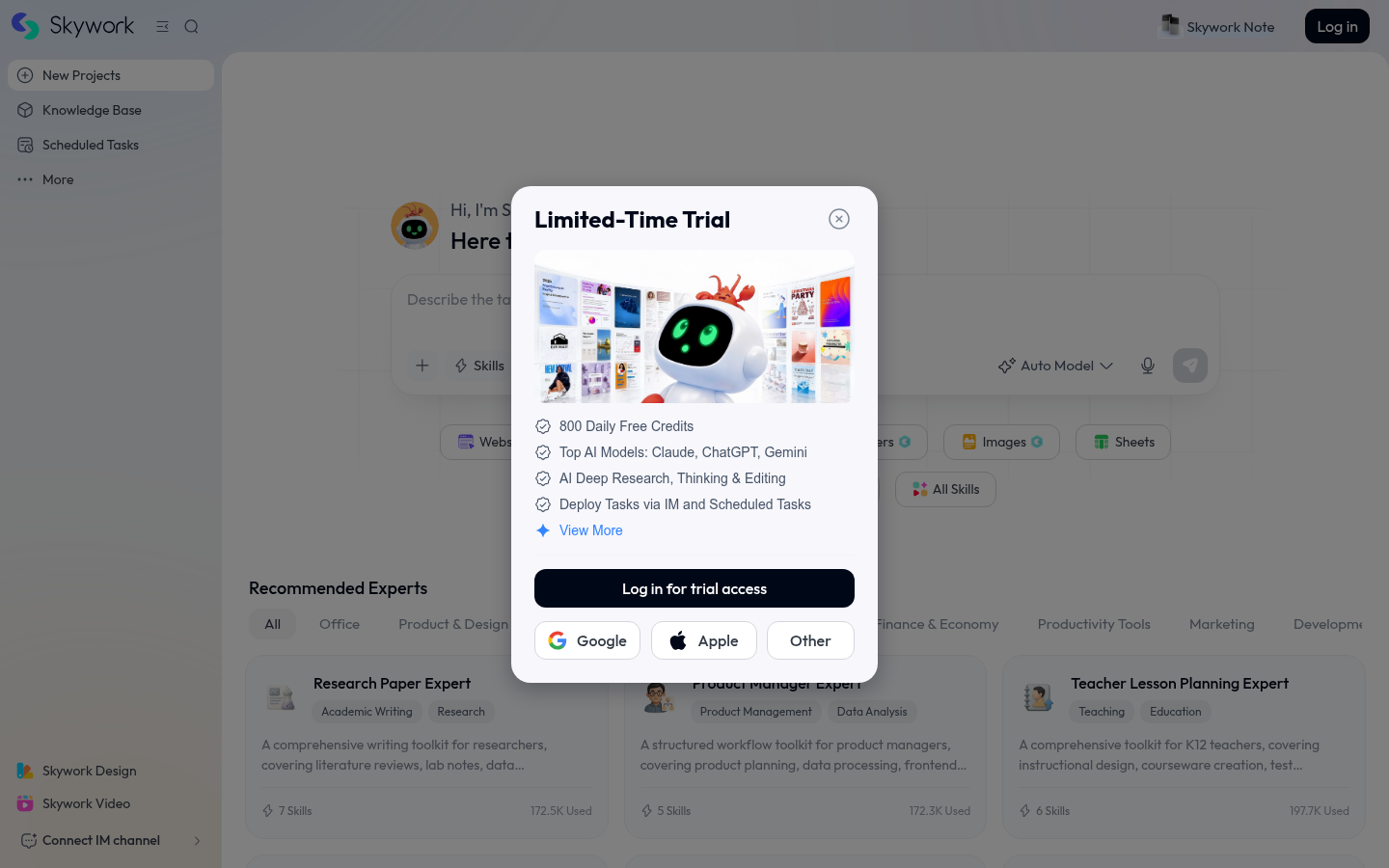
Skywork
- Specialist agents for slides, docs, sheets, images, websites, video and podcasts in one subscription
- Deep Research slides cite real academic and web sources instead of unsourced bullets
- Entry tier priced below Manus, Genspark and Lindy
- Built for deliverables, not the open-ended code execution Manus handles
- Website output stays at MVP quality, not a Webflow or Framer replacement
- No independent review aggregate we could verify, so the signal rests on our own use
The most useful swap if your Manus jobs were decks, docs and creative assets.
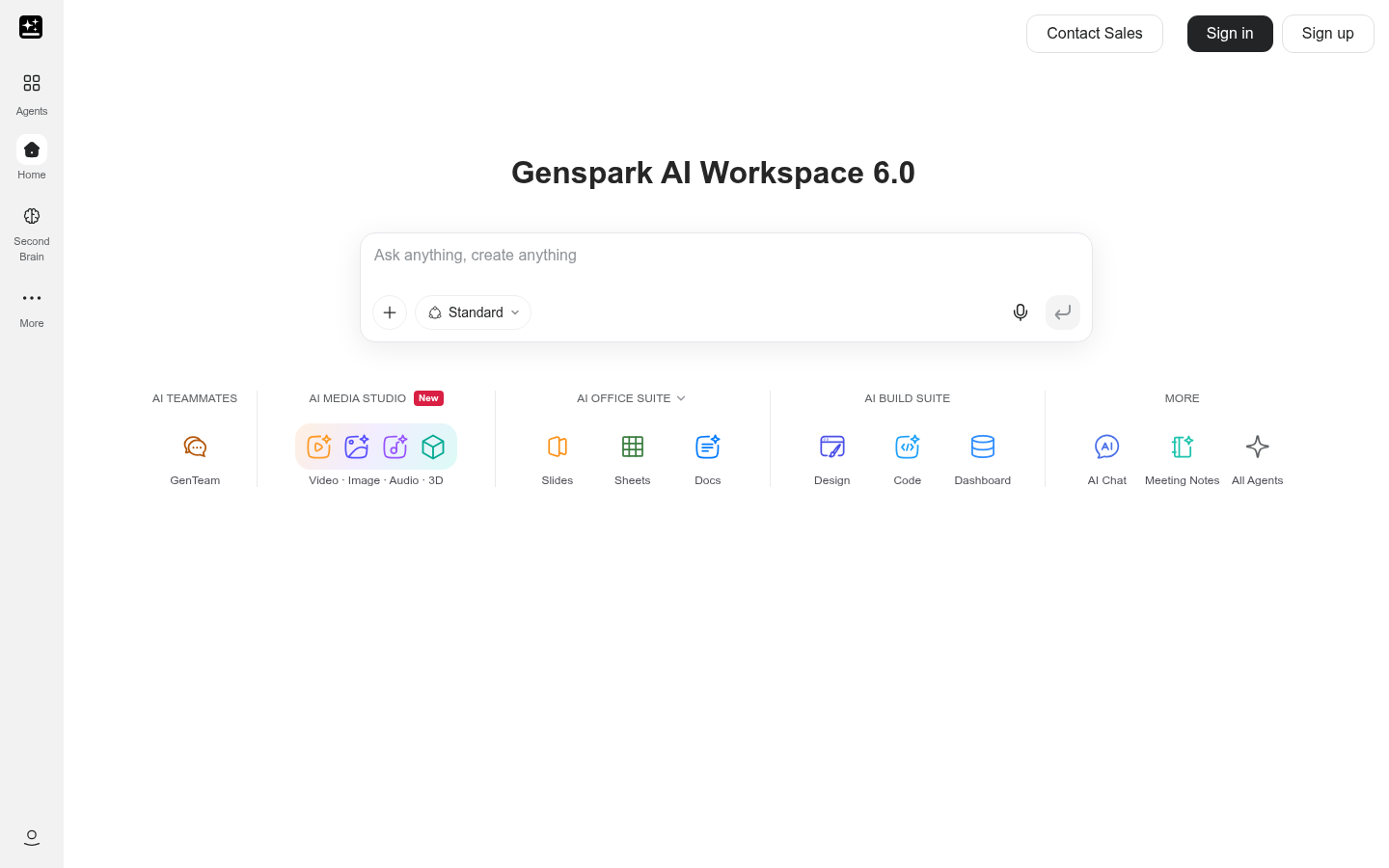
Genspark
- Same single-prompt shape as Manus with a wider task surface
- Office plugins for Google Workspace and Microsoft apps cut export friction
- Free daily credits let you test a real brief before paying
- Credit costs per task stay behind a signup wall
- Spreading across many formats means a specialist can beat it on one, such as slides
- Runs on a credit model, so burn complaints can follow you from Manus
Pick it if you liked how Manus worked and only want a different vendor.
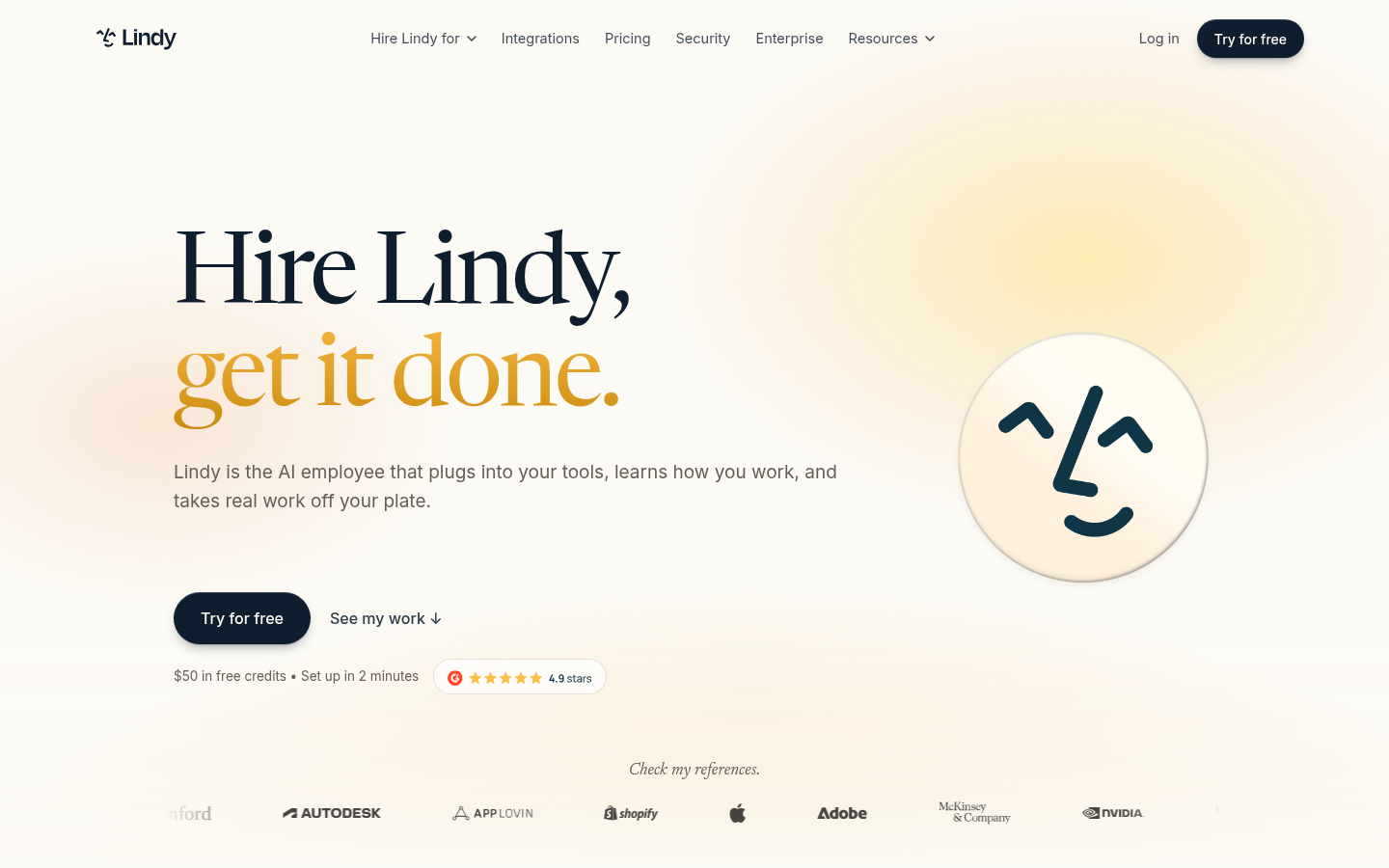
Lindy
- Templates cover real recurring jobs such as meeting notes and lead research
- SOC 2 and GDPR/HIPAA compliance on paid tiers
- Runs on its own schedule once connected to your apps
- Not a replacement for one-off research or builds
- Testers report exhausting a paid plan's credits within weeks of daily use
- Free access is close to unusable because premium actions are gated
Strong for the same job every day, wrong for a one-time project.
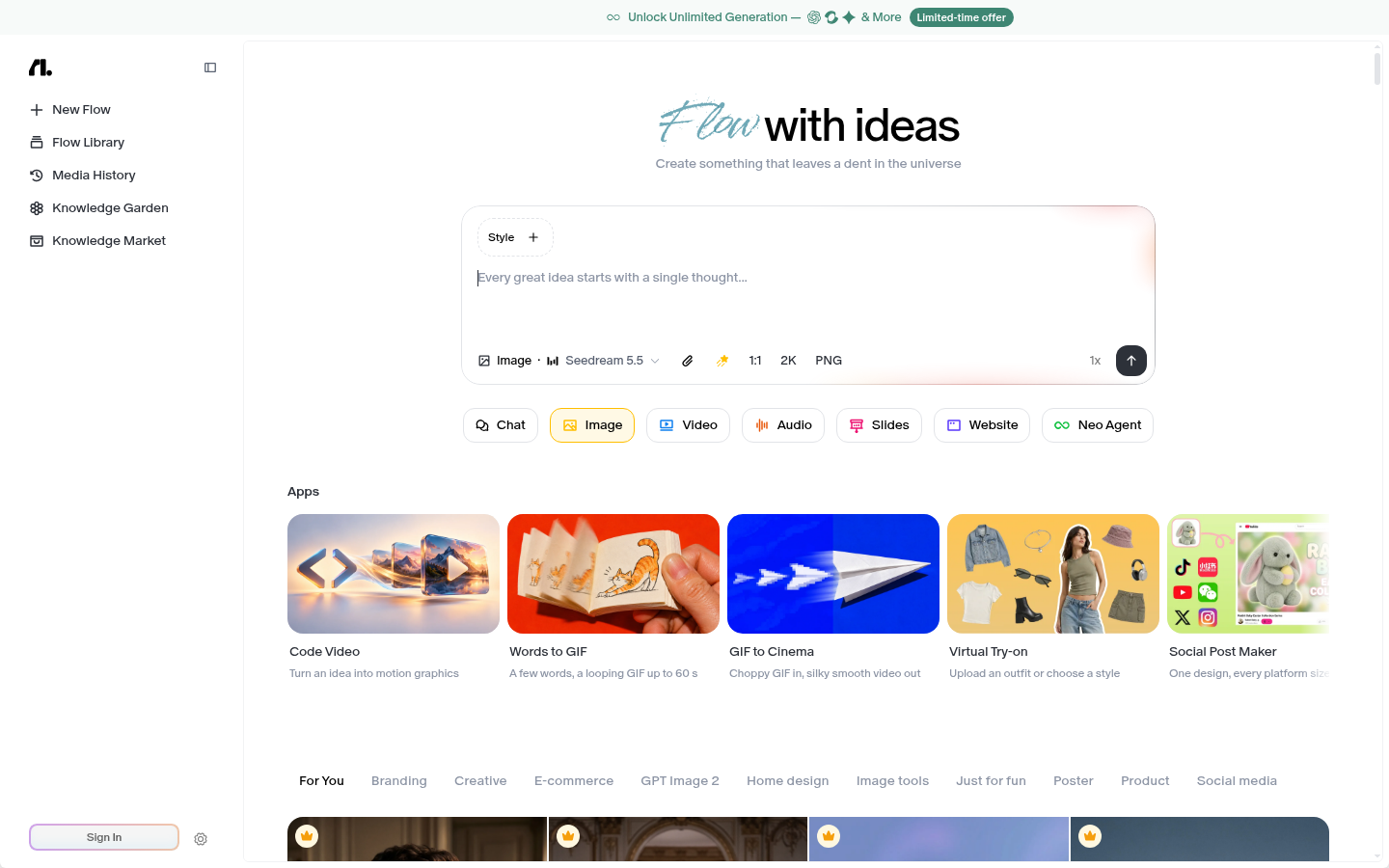
Flowith
- Cheapest paid entry among the hosted agents here at $19.90 a month
- More than 40 underlying models from a single subscription
- Branching canvas keeps parallel research threads separate
- Only 2 G2 reviews, too few to count as a reliable signal
- Some reviewers say the canvas loses your place in long multi-branch sessions
- Credits still deplete on heavy agent work like every hosted option
Worth a test on your own workload before you commit to a plan.
OpenManus
- MIT license with no credit meter, you pay only for model calls
- Full control over prompts, tools and where data runs
- Large open community with about 59,000 GitHub stars
- You own setup, security, uptime and every upgrade
- No managed deliverable pipeline, so slides and docs need extra work
- Hundreds of open issues mean rough edges you will meet yourself
The right answer for an engineering team, the wrong one for a marketer.
Verdict
Skywork takes the top spot for marketers who mostly use Manus to produce decks, documents and creative assets, with Genspark a close second as the nearest like-for-like swap. Choose Lindy for recurring inbox and meeting work, Flowith for a lower-priced visual canvas, and OpenManus only if an engineer will run it. Stay on Manus if the single-prompt model works and you can budget for credit variance.
How we tested
We read each vendor's own pricing and product pages in November 2026, captured a live homepage screenshot of every product, and cross-checked the results against published G2 data, Genspark, Lindy and Skywork help pages, and the GitHub repository for OpenManus. We did not run an identical multi-day workload through all six tools, so the scores are a first-pass filter for a marketing team, not a lab benchmark. Where a review score could not be verified we say so rather than estimate one. Scores use a 0 to 5 scale weighing fit for campaign work, price transparency, output range and evidence. Skywork is an affiliate partner of this site, which means we may earn a commission; we ranked it on the criteria above and list its limits next to the others.