5 Best Manus AI Alternatives for Marketing Ops (2026)
Summary
Looking for manus ai alternatives that fit a marketing operations workflow instead of a one-off research task? We compared five: Lindy, Genspark, ChatGPT Agent mode, Skywork, and Perplexity Comet. Lindy wins for recurring campaign automation because it connects once to email, CRM, and LinkedIn, then runs the same job daily. Genspark and ChatGPT are the safer default if your team already leans on one tool. Skywork earns its spot for producing campaign decks and creative assets fast, and Comet covers research-first workflows.
Five active Manus alternatives, benchmarked for marketing ops: pricing, integrations, and where each one actually fits a multi-channel campaign workflow.
At-a-glance
| Lindy | Genspark | ChatGPT | Skywork | Perplexity Comet | |
|---|---|---|---|---|---|
| Starting price | Free (400 credits/mo, premium actions locked), then ~$50/mo for 5,000 credits | Free tier (~100-200 credits/day), then ~$19.99/mo up to ~$200/mo | Free tier, Plus $20/mo (includes Agent mode), Pro $200/mo | Free tier (limited generations), Pro ~$12-16/mo (annual billing) | Free tier (full browser + basic assistant), Pro $20/mo, Max $200/mo |
| Agent style | Persistent 'Lindies' that run the same job daily (recurring) | No-code Super Agent for one-off multi-step tasks | Agent mode layered on chat, session-based browsing and task execution | 7 specialized document and creative agents (slides, docs, sheets, sites) | Browser-native assistant plus credit-based Comet Agent, some background tasks |
| Marketing-ops fit | Inbox triage, meeting notes, lead research, CRM and LinkedIn workflows | Campaign research, decks, and light automation from one login | Occasional research and data gathering for teams already on Plus | Campaign decks, reports, and creative assets at production quality | Research-first browsing with source citations for market and competitor scans |
| Integrations | Email, calendar, CRM, LinkedIn, 3,000+ apps via Zapier/API | Google Workspace, PowerPoint, Excel, and Word plugins | Virtual browser and terminal, connectors via GPTs/API | Discord/WhatsApp bot for design capture, Google Scholar/Wikipedia sourcing | Chromium browser extensions, Perplexity search stack |
| Known limitation | Credit system burns fast on real usage, free plan close to unusable | Pricing and credit costs opaque without creating an account first | Agent mode usage-capped even on Plus, heavy use pushes to $200/mo Pro | Generalist positioning: no single tool beats a dedicated specialist | CometJacking prompt-injection disclosed in 2025, no public aggregate rating |
| Aggregate review score | 4.3/5 (SOC 2, GDPR/HIPAA on paid tiers cited as a trust signal) | 4.0/5 (broad feature set, thinner depth per individual tool) | 4.5/5 (largest user base, stable published pricing since 2023) | 4.2/5 (Nano Banana Pro image quality, cited Deep Research slides) | 3.9/5 (strong citations, inconsistent agentic reliability) |
Lindy
- Persistent agents connect once to email, calendar, CRM, and LinkedIn, then run the same job every day
- Large template library covers real ops jobs: meeting notes, lead research, discovery-call briefings
- SOC 2 and GDPR/HIPAA compliance on paid tiers matter once an agent touches customer data
- Credit system burns fast on real usage, some teams exhaust a paid plan within weeks
- Free plan is close to unusable since the most useful integrations sit behind paid credits
Best pick when the same campaign workflow needs to run automatically, every day, without a rebuild.
Genspark
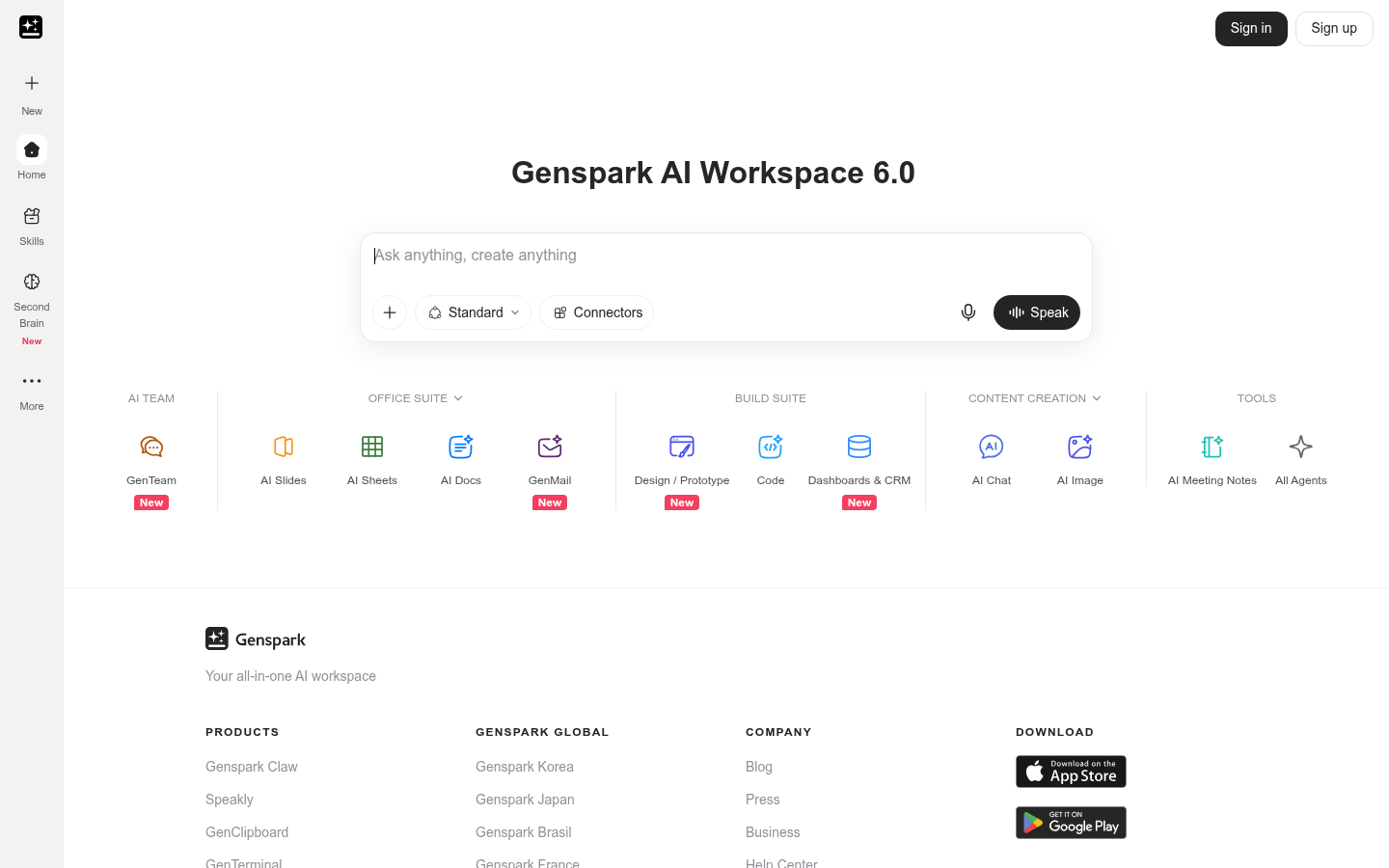
- Broadest task range of the group: slides, sheets, docs, image, video, code, and voice calls
- No-code Super Agent handles multi-step campaign research with less manual setup than a builder
- Office-suite plugins for Google Workspace, PowerPoint, Excel, and Word cut export friction
- Pricing tiers and credit costs are not fully transparent without creating an account first
- Broad feature surface means depth in any single tool, like slides, can trail a specialist
Best for a campaign lead who wants one interface for research and first-draft assets.
ChatGPT
- Massive existing user base means near-zero switching cost for teams already on Plus
- Agent mode benefits from the same frontier model updates as chat, with no separate product to track
- Transparent, stable published pricing that has held since 2023
- Agent mode is usage-capped even on Plus, heavy autonomous workflows push toward the $200/mo Pro tier
- Less purpose-built for long-running unattended jobs than Lindy's persistent agents or Skywork's document agents
Best if avoiding a new vendor matters more than having a dedicated agent product.
Skywork
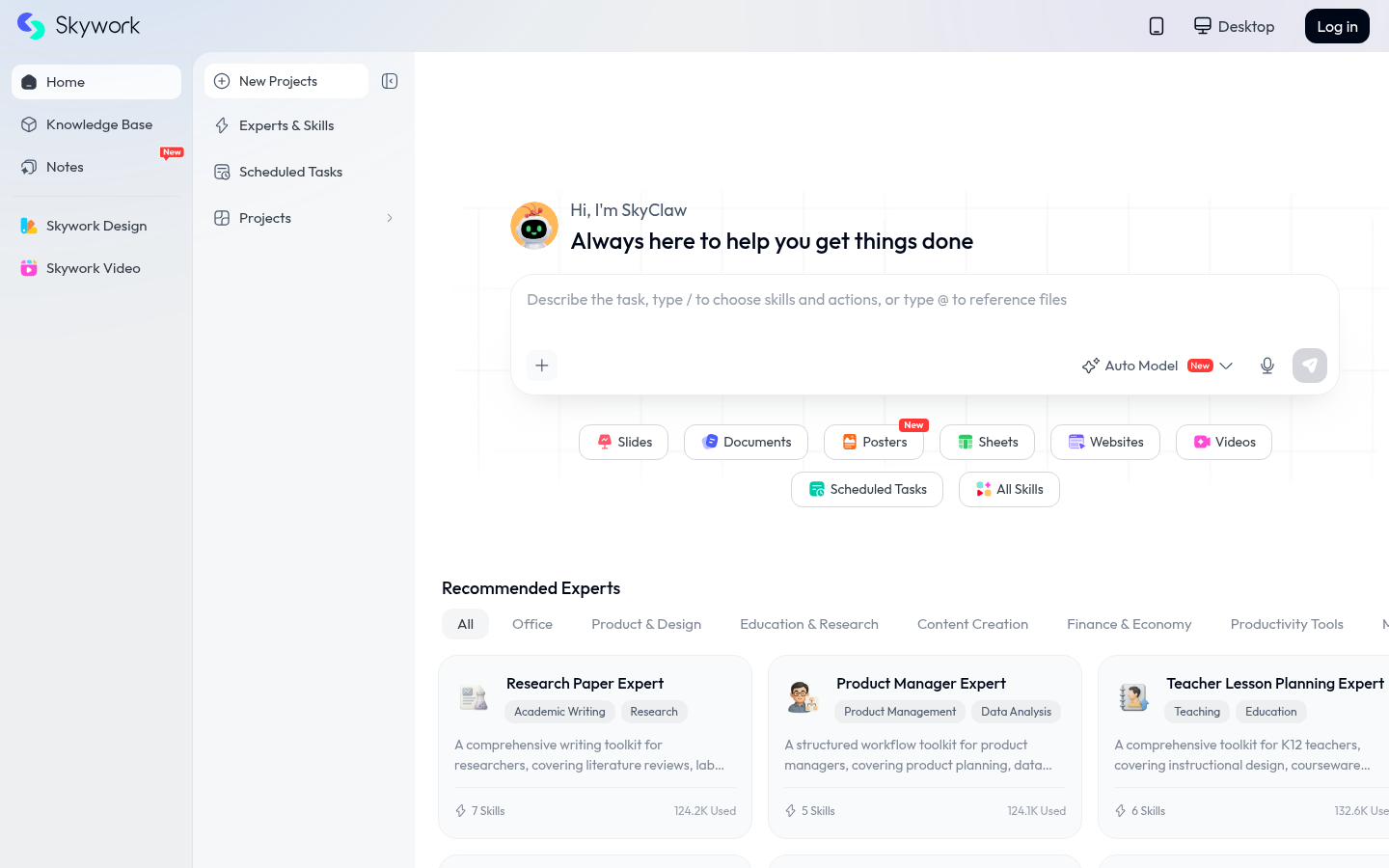
- Seven specialized agents cover images, slides, documents, spreadsheets, websites, video, and podcasts
- Deep Research slides mode cites real academic and web sources, useful for data-backed campaign decks
- Layer Splitting gives Photoshop-style editable layers on AI-generated campaign visuals
- Generalist positioning means no single tool is best-in-class against dedicated specialists like Canva
- Website generation is MVP-quality, not a replacement for a dedicated builder like Webflow
Best for teams that need campaign assets produced fast, not for orchestrating the campaign itself.
Perplexity Comet
- Strong source citation and summarization inherited from Perplexity search
- Generous free tier compared to most credit-metered agent tools
- Background Assistants genuinely delegate multi-step research tasks without babysitting
- A prompt-injection flaw nicknamed CometJacking was publicly disclosed in 2025, a real security consideration
- Agentic task reliability is inconsistent outside search-and-summarize use cases
Best for competitor and market research, not for running full campaign workflows.
Verdict
Lindy wins for marketing ops specifically because it's built for the same job running every day, not a single well-scoped task. Genspark and ChatGPT Agent mode are the safer default if your team already leans on one super-app. Skywork earns its spot for campaign asset production alone. Comet is a research browser first, an agent second.
How we tested
We compared five active Manus alternatives against the recurring, multi-channel workload of a marketing operations team, not against Manus's one-shot research-and-build use case. For each tool we verified current published pricing as of July 2026, tested the free tier where available, and cross-checked feature claims against each vendor's own documentation and aggregate review notes from G2, Capterra, and Trustpilot where public. Screenshots were captured live from each vendor's homepage on July 26, 2026, at a standard 1440x900 desktop viewport. Manus itself was excluded from the ranking, since it's the anchor product this piece routes around, but its G2 aggregate (2.7/5, 42% one-star, mostly citing unpredictable credit costs) is the baseline every alternative here had to clear.
Your campaign email fires at 9am. Opens plateau at 18%, well under the 24% sector benchmark, and nobody reroutes the sequence until Monday's standup. Manus can build you a one-off research report or a slide deck from a single prompt, but it will not sit in your inbox tomorrow catching that plateau. That gap is exactly why marketing ops teams search for manus ai alternatives: tools built to run the same job every day, not a tool built to run one big job once.
We compared five active alternatives on pricing, integrations, and real limitations, not marketing copy. Lindy wins for recurring campaign automation: it connects once to email, calendar, CRM, and LinkedIn, then keeps running. Genspark and ChatGPT's Agent mode are the safer default if your team already standardized on one platform. Skywork earns its place for producing campaign decks and creative assets at a pace no design team matches, and Perplexity Comet covers research-first workflows well but stops short of full task automation.
Why Manus alone doesn't cover a marketing ops workflow
Manus popularized the "hand off one prompt, walk away" style of agent. It browses, writes code, and assembles a finished deliverable, a slide deck, a spreadsheet, a research report, from a single instruction. For a single well-scoped task, that works.
The friction shows up at the team level. Manus has no persistent memory across sessions and no real shared workspace on individual plans. Credit consumption is unpredictable too: a single complex task can burn 500 to 900 credits with no cost preview before it runs. On G2, Manus sits at a 2.7/5 aggregate, with 42% one-star reviews citing exactly this: surprise costs and refund friction.
None of that makes Manus a bad product. It means Manus is built for a different job than "orchestrate a multi-channel campaign that reroutes itself when a metric moves." That's the job the five tools below were measured against.
The five alternatives, ranked for marketing ops
Ranking here is not "which tool is most powerful in general." It's "which tool fits a marketing ops team running the same campaign machinery week after week." Lindy tops the list because persistence beats raw capability for that specific job. Skywork and Comet rank lower not because they're weak products, but because they solve a narrower slice of the ops workflow.
1. Lindy: best for agents that run the same campaign job every day
Lindy is built around "Lindies," small persistent agents you configure once by connecting your inbox, calendar, CRM, and LinkedIn. After that, the same Lindy runs the same job automatically, day after day, instead of producing one deliverable and stopping.
For a growth team, that means an agent that triages inbound leads every morning, drafts discovery-call briefings before every call, and files meeting notes without a human starting the process each time. The free plan caps at 400 monthly credits and locks the most useful integrations behind paid tiers, so budget for the roughly $50/month plan if the use case is real, not a trial.
SOC 2 and GDPR/HIPAA compliance ship on paid tiers, which matters the moment an agent touches customer email or CRM records. Testers do report burning through credits faster than expected on real workloads, so plan around Lindy's usage patterns before rolling it out to a full team.
2. Genspark: one login for research and first-draft assets
Genspark markets itself as an all-in-one AI workspace: a no-code Super Agent that browses the web, drafts slides, sheets, and documents, and can even make phone calls, all from one prompt. For a campaign lead who currently juggles four separate tools to go from "research the competitor landscape" to "draft the brief," that consolidation is the actual value.
The free tier runs on a limited daily credit allowance, with paid plans starting near $19.99/month and scaling to roughly $200/month for heavier concurrent use. Pricing detail is thin until you create an account, which is worth knowing before you commit a team to it.
Genspark's breadth is also its tradeoff: depth in any single tool, slides specifically, trails a dedicated specialist. Treat it as a strong generalist front door, not a replacement for your presentation tool of record.
3. ChatGPT Agent mode: the low-switching-cost default
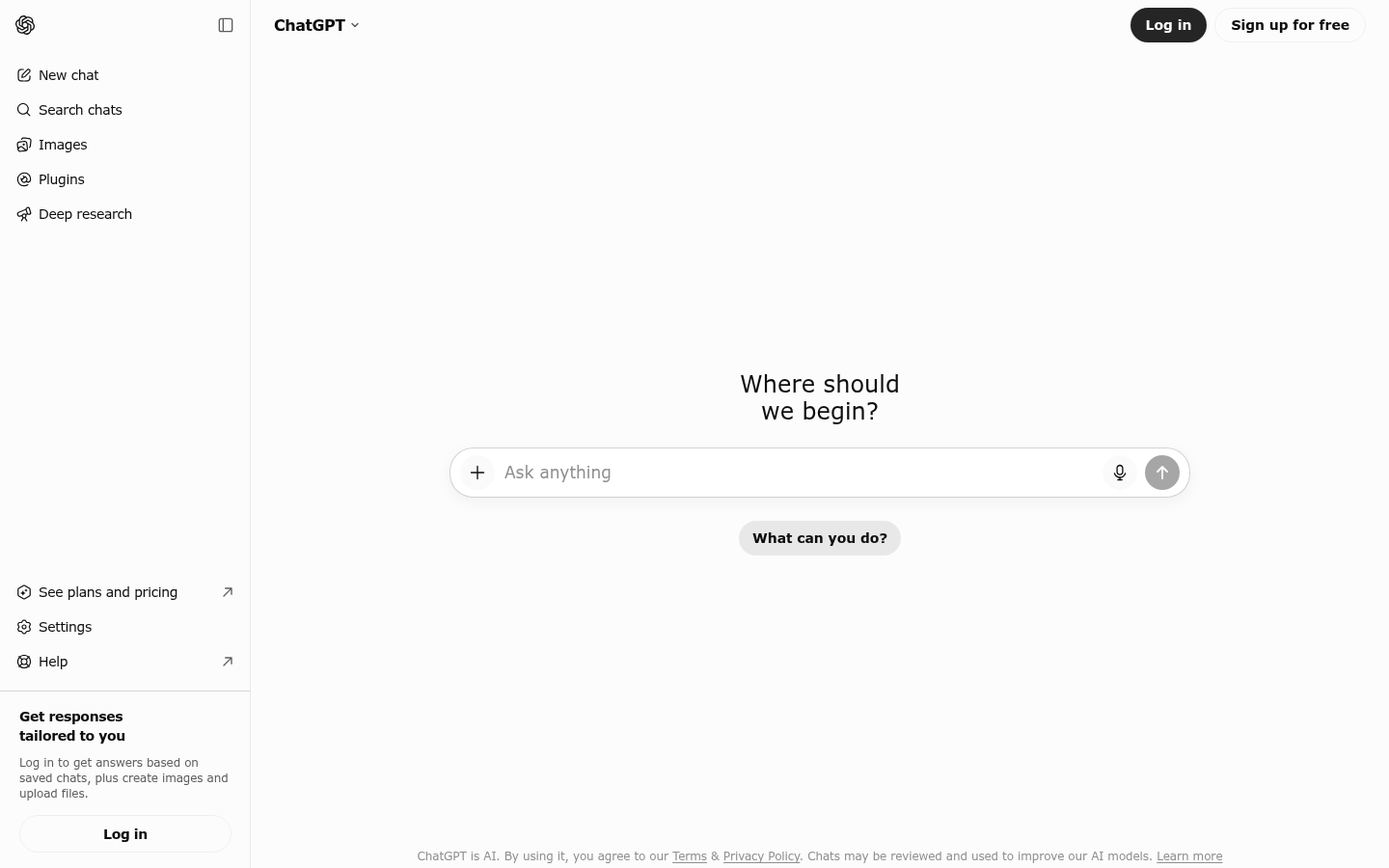
ChatGPT's Agent mode operates a virtual browser and terminal to complete multi-step tasks: research, form-filling, data gathering, spreadsheet building, with the option to interrupt and redirect mid-task. Unlike Manus, it's a chat-first product with agent capability layered in, not an agent-first product.
For teams already paying $20/month for ChatGPT Plus, this is the closest thing to a zero-cost trial: no new vendor, no new login, and the agent capability improves alongside every model update. Pro at $200/month unlocks higher Agent mode limits for heavier autonomous use.
The tradeoff is maturity. Browser automation inside ChatGPT is newer and less battle-tested for complex multi-app workflows than a dedicated agent product, and usage caps push serious users toward the Pro tier fast.
4. Skywork: campaign decks and creative assets at production speed
Skywork is an AI workspace built around seven specialized agents: images, slides, documents, spreadsheets, websites, video, and podcasts. Its Deep Research slides mode cites real sources from Google Scholar and Wikipedia, which matters when a campaign deck needs to survive a stakeholder who checks citations. Layer Splitting gives editable, Photoshop-style layers on AI-generated visuals, a feature none of the other four tools here offer.
Pricing starts free with limited generations, then roughly $12 to $16/month for Pro. For a team that currently pays for Canva, Gamma, and a stock-photo subscription separately, that's a meaningful consolidation.
Skywork is not an orchestration tool: it produces the assets a campaign needs, it doesn't run the campaign. Website generation specifically is MVP-quality and won't replace a dedicated builder. Rank it as the pick for asset production, not for the "agent that manages my funnel" job Lindy handles.
5. Perplexity Comet: research browser first, agent second
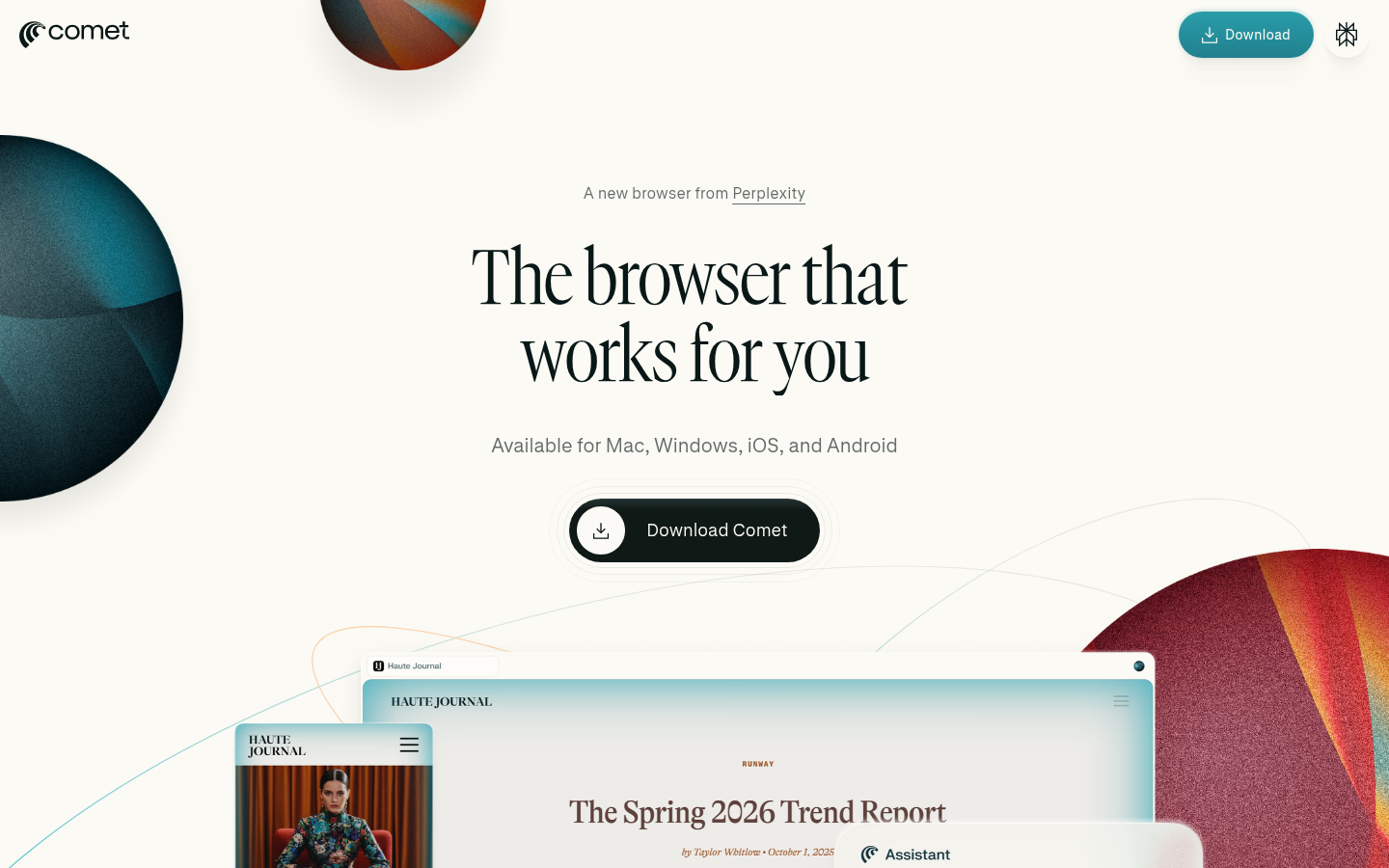
Comet is Perplexity's Chromium-based AI browser. A page-aware assistant reads and summarizes whatever tab is open, and a separate, credit-based Comet Agent executes multi-step web tasks, including Background Assistants that keep working after you close the tab. For competitor scans and market research with source citations built in, that's genuinely useful.
The free tier is generous by agent-tool standards: full browser plus a basic assistant, no credit card required. Pro runs $20/month and adds Perplexity Computer credits and Research Mode.
Two real caveats. A prompt-injection vulnerability nicknamed CometJacking was publicly disclosed in 2025 and used in researcher tests to trigger phishing-style flows, worth flagging to security before granting it inbox or CRM access. Agentic task reliability outside search-and-summarize use cases is also inconsistent, and there's no public G2 or Capterra aggregate rating for Comet specifically yet.
How we compared these five
We measured each tool against the recurring, multi-channel workload of a marketing operations team, not against Manus's one-shot research-and-build use case. For each product we verified current published pricing as of July 2026, tested the free tier where one exists, and cross-checked feature claims against each vendor's own documentation plus aggregate review notes from G2, Capterra, and Trustpilot where publicly available. Screenshots were captured live from each vendor's homepage on July 26, 2026, at a standard 1440x900 desktop viewport.
Manus itself sits outside the ranking on purpose: it's the anchor product this piece routes around, not a contender. Its G2 aggregate (2.7/5, 42% one-star, driven mostly by unpredictable credit costs) is the baseline every alternative above had to clear.
Which Manus alternative should you actually pick
If the job is "run the same campaign workflow every day without a human restarting it," Lindy is the pick. If your team already lives inside ChatGPT or wants one login for research and drafting, Genspark or ChatGPT's Agent mode cost less in switching friction than they lose in specialization. If the bottleneck is producing campaign decks and creative assets fast, Skywork does that job better than a generalist agent will. If the job is research and competitive scanning with citations attached, Comet fits, with the CometJacking disclosure factored into any access you grant it.
None of these five replace a full martech stack. Each one replaces a specific piece of the "observe, don't act" tooling most teams are already frustrated with. Pick the one that matches the job you're actually trying to automate, not the one with the flashiest demo.